
Home / Construction in Winter — Delhi NCR
GRAP rules · Winter bans · Realistic delaysConstruction in winter in Delhi NCR — bans, compliances & real delays.
Every winter, building sites across Delhi NCR slow down or stop — partly by law, partly by physics. Between CAQM's GRAP stages, Delhi's 42-day complete construction ban, dust-control compliance and cold-weather concrete curing, a project that ignores the season loses months. Here's exactly how winter construction works in 2026, what the government requires, and how much delay you should honestly budget for.
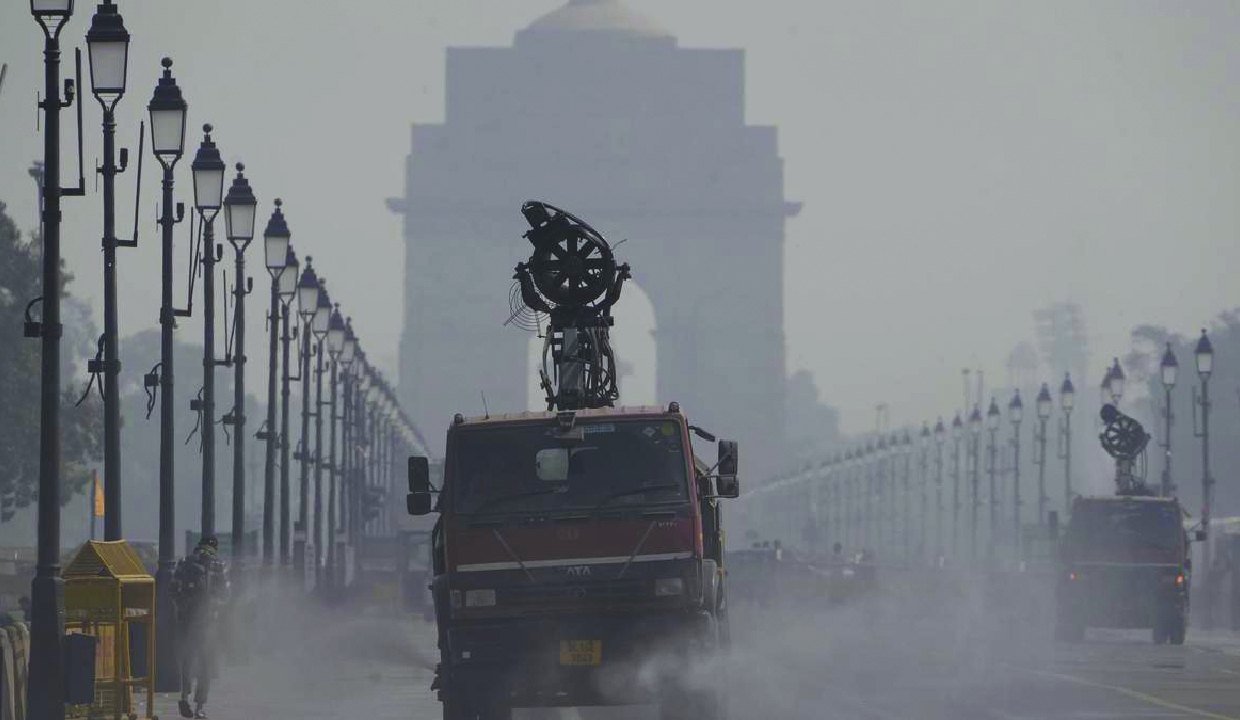
Why winter construction is genuinely slower.
Even with no ban in force, Delhi NCR's December–January conditions change how a building can be built. This is the part most contractors don't explain.
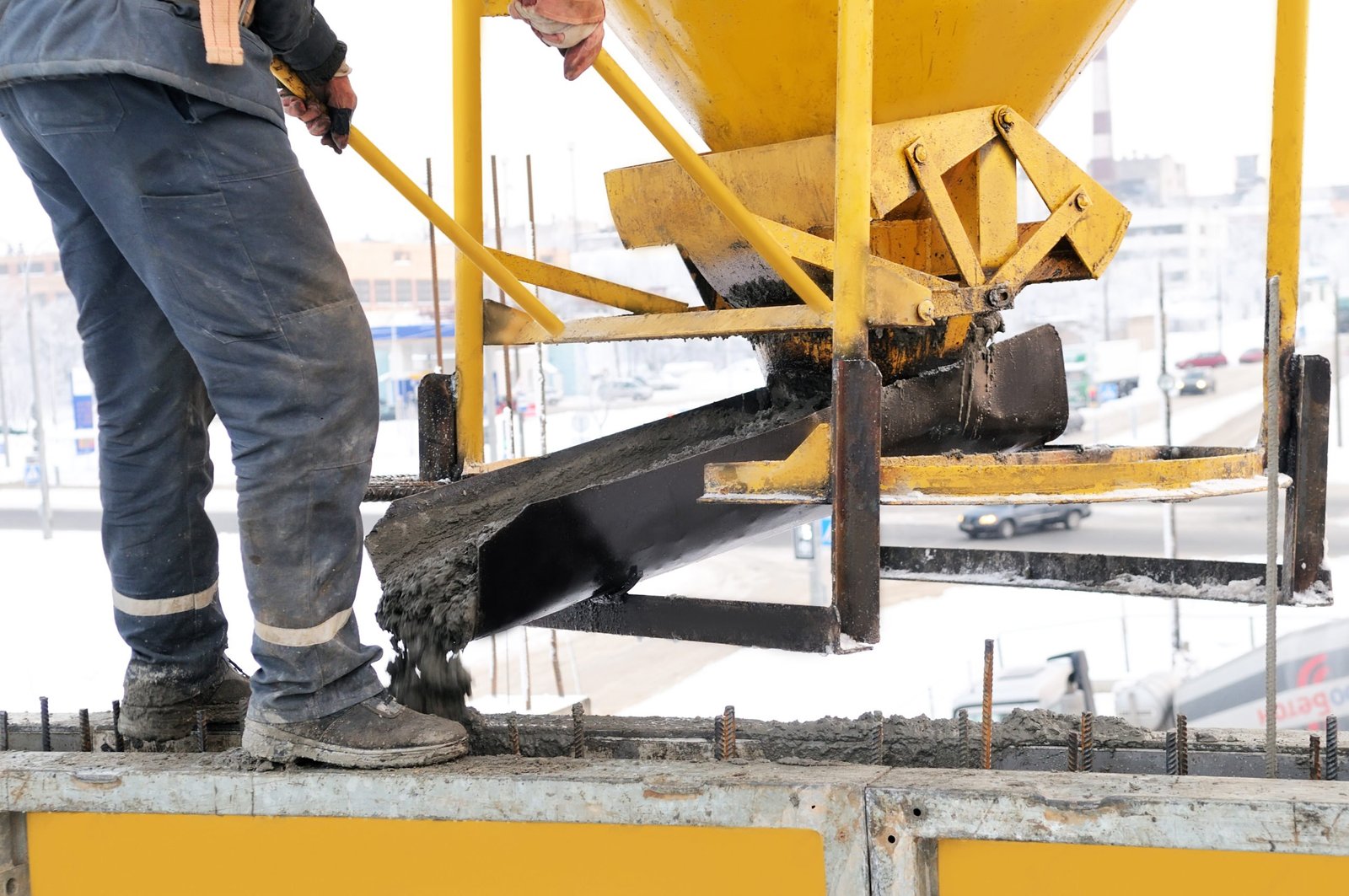
Cold concrete, short days, wet paint
Concrete gains strength through a heat-releasing chemical reaction — and that reaction slows sharply as temperature drops. Below 10°C, strength gain falls off measurably; near 5°C it nearly stops. In Delhi's winter nights (often 3–8°C), a slab that would be ready for de-shuttering in 10–12 days in October can need 16–21 days in January, plus insulated curing blankets and warm mixing water.
- Concrete & structure — slower curing, later de-shuttering, frost-risk on exposed pours before sunrise
- Plaster, paint & polish — most coatings misbehave below ~10°C; damp cold air causes uneven drying, efflorescence and blistering
- Fog & visibility — dense morning fog cuts the safe working day, slows crane and lifting work, and delays material trucks on highways
- Waterproofing & adhesives — membrane and tile adhesives need surface temperatures above their rated minimum, usually 10°C
The takeaway: a winter slab is not a bad slab — it just needs more days and more protection. Schedules that pretend otherwise are the ones that crack, literally and on the calendar.
The government compliances every site must follow.
Three overlapping frameworks govern winter construction in Delhi NCR. Together they decide when you can build, what you must install, and what it costs if you don't.
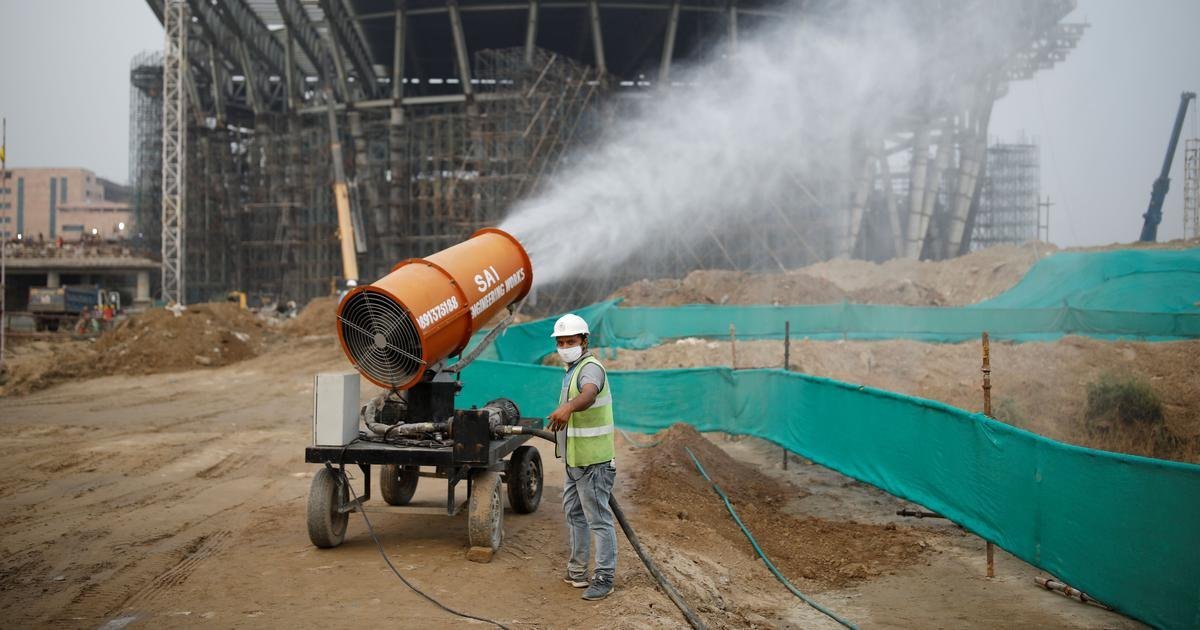
GRAP — the AQI-triggered switch
The Commission for Air Quality Management (CAQM) runs the Graded Response Action Plan across all of NCR — Delhi, Gurugram, Faridabad, Noida, Greater Noida, Ghaziabad and beyond. Restrictions switch on automatically as Delhi's AQI worsens, and since the November 2025 revision, tougher measures kick in one stage earlier than before.
- Stage I–II (AQI 201–400) — construction continues, but dust rules are enforced hard: audits, sprinkling, covered materials, GPS-tracked waste trucks
- Stage III (AQI 401–450) — bans excavation, piling, demolition, masonry, RMC batching plants, plastering, painting, tile/stone cutting and dust-material transport
- Stage IV (AQI 450+) — near-total stop; diesel trucks barred from Delhi; only hospitals, metro, defence and similar exempt projects continue
Delhi's own winter ban (2026–27): separate from GRAP, the Delhi government has ordered that dust-generating demolition and outdoor civil construction stay restricted from 1 November to 31 January, with a complete ban on all construction and demolition from 10 December to 20 January. Sites above 500 sq m are watched in real time through the Dust Portal and AI-enabled cameras, with alerts going straight to the government's command centre — working "behind covers" no longer works.
GRAP stages and what they mean for your site.
The four GRAP stages, their AQI triggers, and the practical impact on a private building project.
| GRAP stage | Delhi AQI | Construction impact | What still runs |
|---|---|---|---|
| Stage I — Poor | 201 – 300 | None directly; dust-control enforcement begins, site audits increase | All work, with full dust compliance |
| Stage II — Very poor | 301 – 400 | Strict inspections; anti-smog guns and sprinklers mandatory at active sites; waste trucks checked | All work, under tight monitoring |
| Stage III — Severe | 401 – 450 | Earthwork, piling, demolition, masonry, RMC plants, plaster, painting, tile/stone cutting and material transport banned | Interior fit-out, MEP, joinery, minor indoor repairs |
| Stage IV — Severe+ | Above 450 | Essentially all construction stopped; diesel commercial vehicles barred from entering Delhi | Only exempt public-interest projects (metro, hospitals, defence) |
Penalties are real: NGT's polluter-pays formula charges ₹50,000 per site violation and ₹5,000 per uncovered vehicle. DPCC levied over ₹2.38 crore in Environmental Compensation on 539 large projects in a single year, and CAQM can order closure — after which a site stays shut until the commission explicitly permits resumption. The fine hurts; the forced idle weeks hurt more.
How much delay should you actually expect?
It depends entirely on which stage your building is in when November arrives. Here is the realistic math for Delhi NCR.
| Project stage in November | Typical winter impact | Why |
|---|---|---|
| Excavation & foundation | 6 – 10 weeks | Earthwork is first on every ban list; the 42-day Delhi ban plus GRAP Stage III/IV days hit directly |
| Structure (RCC frame, slabs, masonry) | 6 – 10 weeks | Masonry and RMC batching banned at Stage III; cold nights stretch curing cycles even on permitted days |
| Plaster, facade & exterior finishing | 4 – 8 weeks | Plaster, painting and tile/stone cutting banned at Stage III; cold damp air slows drying on allowed days |
| Interior fit-out & MEP | 1 – 3 weeks | Mostly permitted through bans; delays come from material movement and fog, not the law |
| Design, approvals & procurement | Nil — best winter activity | Drawings, sanctions, vendor finalisation and material pre-ordering are unaffected by site bans |
The smart sequence: use October–November to finish structure, let December–January carry interiors and MEP, and return to facade and finishing in February. A project sequenced this way loses two to three weeks, not ten. Use our free construction cost calculator to budget the build, then talk to us about timing it around the bans.
Built around the bans, not surprised by them.
Ten-plus winters of building in Gurugram and Delhi have taught us a repeatable playbook.
Schedule casting before mid-December
Slabs and structural pours are planned to complete before the complete-ban window, so curing — which is time, not labour — happens while the site is legally idle.
Shift the workforce indoors
Electrical, plumbing, joinery, false ceilings and interior fit-out are permitted through most restrictions. We front-load material so indoor trades never wait on a truck stuck at the border.
Compliance as default, not defence
Green netting, covered material stacks, sprinkling, wheel washing, portal registration and GPS-tracked waste movement — documented daily, so an inspection is a non-event.
Honest calendars, in writing
Every winter-spanning project gets a schedule with the ban windows and GRAP-risk weeks already marked. You see the realistic handover date before you sign, not after the first stop-work order.
Winter construction & GRAP, answered.
The questions homeowners and plot owners ask us every October — with straight answers.
Yes, in phases. Under Delhi's Winter Action Plan, dust-generating demolition and outdoor civil construction is restricted from 1 November to 31 January, and a complete ban on all construction and demolition activity applies from 10 December to 20 January — about 42 days. On top of this, CAQM can impose GRAP Stage III or IV bans whenever Delhi's AQI turns severe, which can add further stop-work days in November, late January and February.
GRAP (Graded Response Action Plan) is CAQM's emergency framework for Delhi NCR air quality, with four stages tied to AQI: Stage I (201–300), Stage II (301–400), Stage III (401–450) and Stage IV (above 450). For construction, Stage III is the turning point — it bans earthwork, piling, demolition, masonry, RMC batching plants, plastering, painting, tile and stone cutting, and the transport of dust-generating materials. Stage IV stops essentially all construction and bars diesel trucks from entering Delhi.
Plan for 6 to 10 weeks of calendar impact between November and February if your project is in the structure or finishing stage. The fixed component is the 42-day complete ban (10 December–20 January) in Delhi; on top of that, GRAP Stage III/IV days, fog-shortened working hours and slower concrete curing typically add another two to four weeks. Projects that reach finishing (interior, MEP, joinery) before December lose far less time, because indoor work continues through most restrictions.
GRAP applies across the entire NCR — including Gurugram, Faridabad, Noida, Greater Noida and Ghaziabad — so Stage III and IV construction restrictions bite everywhere. The separate 42-day complete ban (10 December–20 January) is a Delhi government order and applies within Delhi; Haryana and UP NCR districts follow GRAP plus their own state directions, which are usually slightly less absolute but still stop dust-generating work for long stretches.
Stage III bans dust-generating work — excavation, piling, demolition, masonry, RMC batching, road work, plastering, painting, tile and stone cutting, and transport of materials like sand, cement and debris. Less polluting work can continue with strict dust compliance: interior fit-outs, minor MEP welding, electrical and plumbing rough-ins, joinery, false ceilings and similar indoor trades. Exempt categories include hospitals, metro and railway projects, airports, defence works and linear public infrastructure — private homes are not exempt.
Every site must follow CPCB's dust mitigation norms and the C&D Waste Management Rules 2016: full site barricading and green netting, covering of sand, cement and debris, tarpaulin-covered transport, water sprinkling and anti-smog guns, wheel-washing at exits, and no dumping on roads. Sites with a plot area of 500 sq m or more must additionally register on the pollution board's web portal (Delhi's Dust Portal), file self-declarations, and now face AI-camera and sensor-based remote monitoring.
Under NGT's polluter-pays directions, a violating site faces compensation of ₹50,000 per default, plus ₹5,000 for every vehicle caught transporting material or debris without cover. DPCC levies Environmental Compensation that routinely runs into lakhs per project — over ₹2.38 crore was imposed on 539 large projects in a single year — and repeat violations lead to closure orders under the Environment Protection Act, after which a site cannot restart without explicit CAQM or DPCC permission. In practice, a closure order costs far more in delay than the fine itself.
Independently of any ban, Delhi's December–January temperatures (often 3–8°C at night) slow concrete hydration sharply — below 10°C strength gain drops significantly, and near 5°C it nearly stops, so slabs need longer curing, insulated covers and later de-shuttering. Paint, polish and waterproofing also misbehave below about 10°C, plaster dries unevenly in cold damp air, and dense morning fog shortens the effective site day. A good contractor builds these technical allowances into the winter schedule even when no ban is in force.